


History of Kalkan
While its neighbours have ruins going back millennia, Kalkan carved out its own place in the 19th century. It was the only safe harbour between Fethiye and Kaş, which made it a strategic gateway for the Ottoman Empire. Founded roughly 200 years ago as Kalamaki by Greek merchants from nearby Meis, the fishing village grew quickly into a commercial town.
The town has been named twice, and both names came from the natural world rather than from any conqueror. Kalamaki is Greek for a small reed — the kind that once grew along this shore. Kalkan is Turkish for a shield, but it is also the name of a fish, the turbot, which is what the boats here were pulling out of the water long before anyone came for the view.
The golden age of trade
In its Ottoman heyday Kalkan was the window to the world for the fertile Xanthos Valley and the high plateaus of Elmalı. Camel caravans came down from the mountains and the cargo was more varied than you might expect: cotton and grain, timber from the cedar and pine forests inland, olive oil, wine, silk, sesame, charcoal — and acorns, which were shipped out by the sack because the tannin in them was used as dye. All of it went onto ships bound for the far corners of the Empire.
For a stretch of the late nineteenth century this small harbour handled more trade than either Fethiye or Antalya. That is difficult to picture standing here now, which is precisely what makes it worth knowing.
That prosperity built an unusually developed community for a coastal village of its size — dozens of restaurants, tailors and jewellers.
1923 and what it left behind
The 1923 population exchange between Turkey and Greece closed a chapter. The Greek residents left — some to Meis, the island they or their parents had come from, others to Attica near Athens, where they founded a new settlement and gave it the old name, Kalamaki. What they could not take with them was the architecture, and that is still the soul of the town.
The clearest symbol of that era is the old Greek Orthodox Church of St Panteleimon, standing above the harbour and serving today as the town’s central mosque — a layered piece of heritage rather than a museum piece.
Why the old houses look like that
The houses in the old town were not designed to be pretty. Every feature on them is an answer to the climate or to the slope.
Stone below, timber above
The ground floor is stone — cool, solid, and safe against damp. The upper floor is timber, which is lighter on the walls and moves rather than cracks. On a hillside this matters more than it sounds.
The cumba
The upper floor pushes out over the lane on brackets. It buys living space where the plot has none, catches the breeze coming off the water, and lets you see who is coming up the hill.
Wooden shutters
Painted shutters, not curtains. They close against the afternoon sun and open at night, which is how a stone house stays liveable in August without machinery.
Whitewash
Lime wash reflects heat and disinfects the surface. The bougainvillea against it came later, and stayed because it works.
Slumber, then rediscovery
Kalkan stayed the only working port for this stretch of coast into the 1970s. What ended that was not a decision but a road: once the route through Fethiye was built, cargo moved by lorry and the harbour lost the job it had been built for.
By then something else had already started. From the 1960s the first Blue Cruise yachtsmen and independent travellers had been putting into these bays, and when the cargo ships stopped coming it turned out the town had quietly acquired a second reason to exist.
What happened next is why Kalkan looks the way it does. Unlike many Mediterranean resorts, it chose a different path: strict conservation rules kept mass tourism out. The whitewashed stone houses, the narrow alleys under bougainvillea and the rooftop terrace restaurants are not a stage set — they are what was preserved.
At the heart of Lycia
Kalkan makes an unusually good base for the ancient world. Within a short drive:
Xanthos
Its most famous monuments are now in the British Museum in London.
Patara
Its assembly hall was built in the early first century BC and seated about 1,400 delegates — the Lycian League met here, and it is often called the first democratic parliament.
The Lycian Way
A trail linking turquoise bays and snow-capped peaks, running right past the town.
Myra
Rock tombs and a Roman theatre, roughly 2,000 years old.
Whether you are walking through those ruins or watching the sun go down over the harbour, Kalkan offers a rare combination: the rough grandeur of the ancient world alongside a town that has stayed deliberately small.
Seeing it for yourself
Our guide to things to do in Kalkan lists the ancient cities with distances and what to expect at each. For the climate and the best season to walk them, see Kalkan weather and climate.
True Blue Boutique Hotel Kalkan
We have been in Kalkan for 40 years. We are not just operators; we are your hosts. This is our home. For years, we have been welcoming our guests with the motto: “Make them feel at home.”
As the True Blue Boutique Hotel family, we hosted guests from 60 different countries in 2026.
Ten different accommodation types across suites, residences and private villas — one of them is surely right for you.
Suites
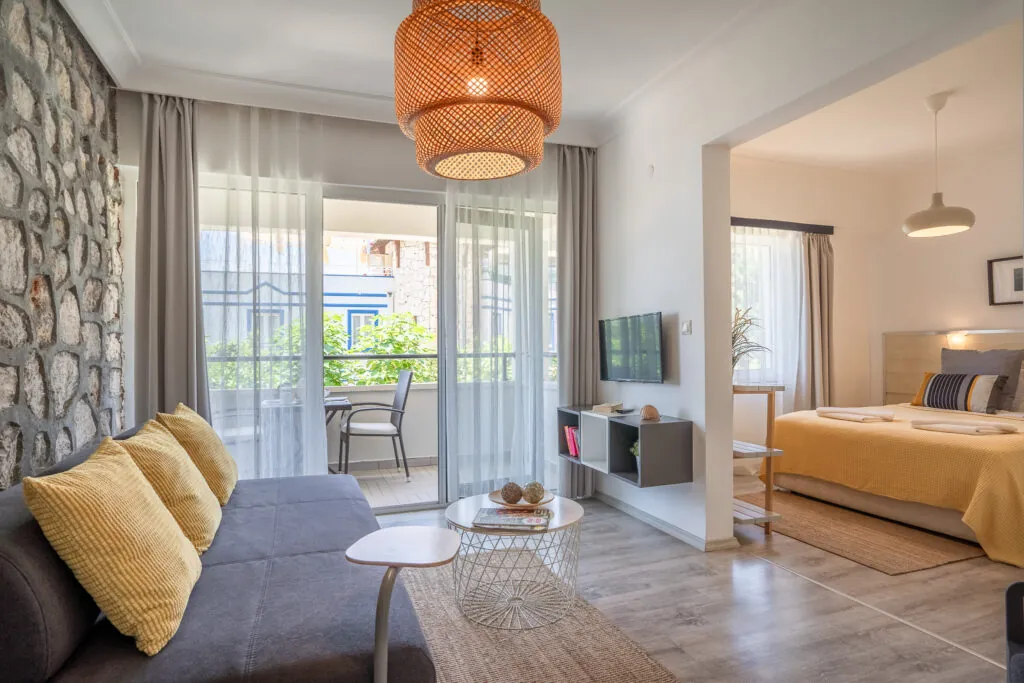
The suites include a living room with a sofa bed, suitable for families with one child. Worth seeing: the rooftop rooms with sea views and the romantic rooms with private terraces.
Residences
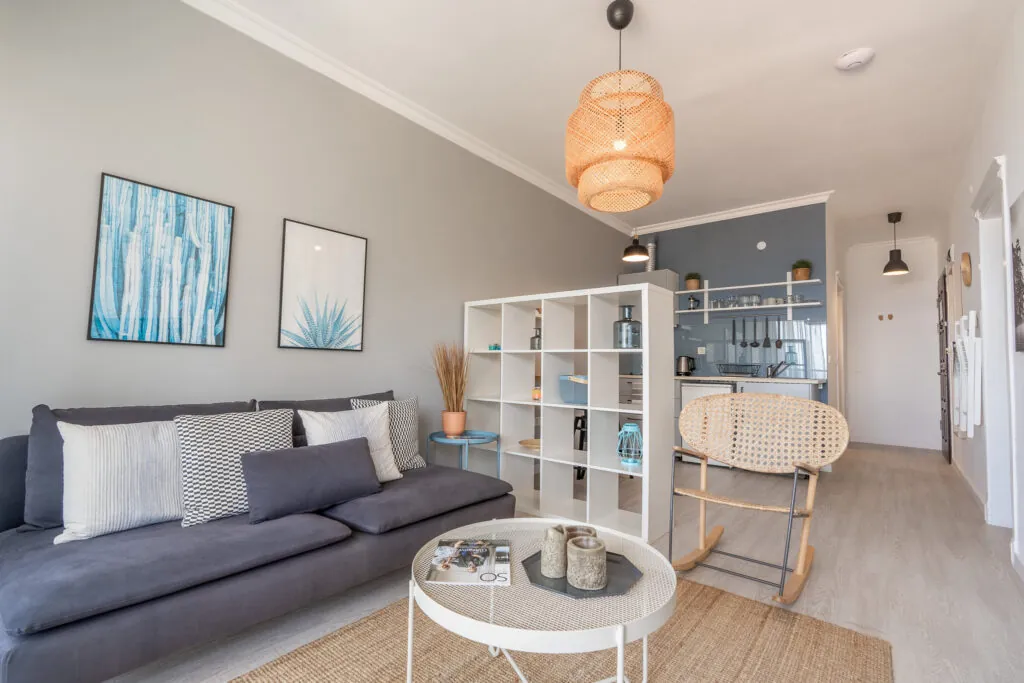
The garden terrace studio and the stone house studio suit 2 adults and 1 child. Three different two-bedroom residences host 4–5 guests in total.
Villa
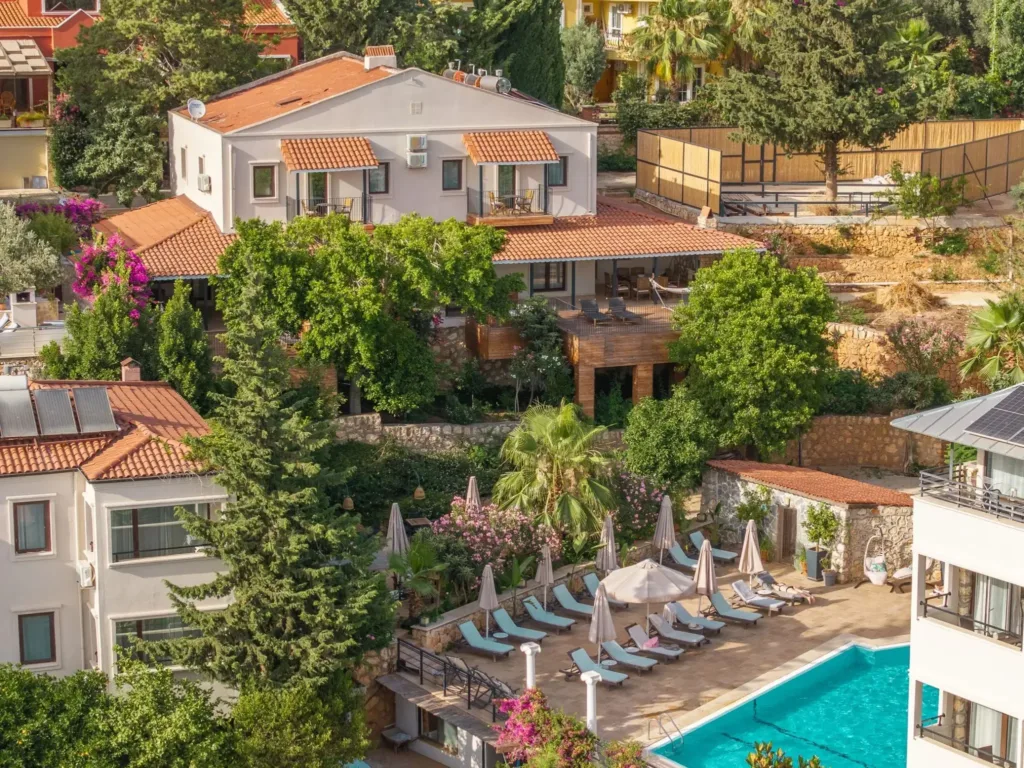
Hotel comfort with 200 m² of space, a jacuzzi, stone walls and four bedrooms. Our terraced villas host large families and groups for stays of five days or more.